
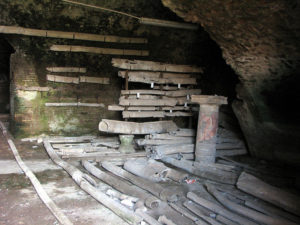
Roman Lead Pipes, Ostia Antica, Wikimedia commons, user Chris 73, public domain
Programme
Opening: Thursday 8th of August
Human Engagements With Water: from dominion to conviviality
A public lecture by Prof. Veronica Strang.
6.30pm, 8th August 2019, Neill Lecture Theatre, Trinity Long Room Hub [register here]
Preceded by a #LoveIrishLandscapes mixer in the Hoey Ideas Space, Long Room Hub – 4.30-6.30pm.
All sessions in Neill Lecture Theatre, Trinity Long Room Hub, 2nd Floor [register here]
Wheelchair and step free access available via elevator
Day 1: Friday 9th of August 2019
| 9.20-9.30am | Short welcome and set-up (Dr. James L. Smith) |
| 9.30-11am | Session 1: Ice-breaker group activity based on the event themes of water, society, digital tools and the interdisciplinary humanities |
| 11-11.15am | Coffee break (coffee available in Neill LT Lobby from 9.30am) |
| 11.15am-12.45pm | Session 2: Team project design exercise based on UN sustainable development goals |
| 12.45-1.45pm | Lunch (Hoey Ideas Space, Hub 3rd Floor) |
| 1.45-3.15pm | Session 3: Workshop, Prof. Catherine Clarke
Confluences: Material into Digital In this workshop, we’ll explore the capacity of water to make connections, and how those currents and confluences – geographical, narrative, conceptual, chronological – might be represented and interrogated through digital platforms and tools. We’ll also share and reflect on our own embodied, human experiences with water, examining the challenges of translating deeply material / sensory encounters and somatic knowledge into the digital realm. What kinds of confluences might be possible between the material and embodied and the digital or virtual? What is lost in digital representations of water, and how could we develop tools and approaches to recuperate these properties and experiences? We’ll begin the workshop with a practice-based activity, to help us think playfully and creatively, remind us of the embodied experiences involved in encountering water, and open up metaphorical ways into exploring confluences. Note: Please bring along a small bottle of water from a watercourse / body of water you are currently researching, or which means something special to you. |
| 3.15-3.30pm | Coffee (Hoey Ideas Space) |
| 3.30-5pm | Session 4: Early Career Researcher Roundtable
The Present: A discussion of structures, initiatives and challenges |
| 6pm | Optional event:
A shared engagement with the Word Steps soundscape by artist Camilla Fanning and walk along the banks of Dublin’s Grand Canal. [Download on your smartphone here] |
Day 2: Saturday 10th of August 2019
| 9.30-11am | Session 5: Walking and composition activity along the banks and bridges of the Liffey near Trinity College Dublin (coffee and meeting point in Long Room Hub, Neill Lecture Theatre) |
| 11-11.15am | Coffee break (coffee available in Neill LT Lobby from 9.30am) |
| 11.15am-12.45pm | Session 6: Water fictions writing event following on from walking activity and using text from key sources and own writing (responses from Camilla Fanning and Jessica Foley) |
| 12.45-1.45pm | Lunch (Hoey Ideas Space) |
| 1.45-3.15pm | Session 7: Workshop, Prof. Gabriela Christmann and Dr. Anna Barcz
Aqua projects in the time of climate change Literature portrays human actors in different, even contrasting, relations with the river stretching from “living with water” to “war on flood”; or it describes how people adapt to changing environments or have problems with adjusting to them. The Odra river is a particularly interesting case, firstly because of being a border river between Poland and Germany, especially intertwined into a nationalistic and regional discourse; and secondly, because it is a flooding river. Through literature it is possible to adequately address a question about the differences and similarities between Polish and German culture in adapting to such hazardous aquatic phenomena as floods. However, in our literary studies, we also took into consideration the catastrophic discourse, which blurs the anthropocentric knowledge on rivers and indicates the aquacentric modes of recognition in the time of climate change. Apart from the Odra project, experiences from a project on sea-level rise and flooding in times of climate change at the Baltic seacoast will be discussed. On the example of the cities of Lübeck and Rostock, we will show two surprising photo-collages stemming from the local media discourse in Lübeck and Rostock, each representing the specific local perceptions of sea-level rise. Since the results of the research project once has attracted high media attention in Germany, we will not least explain why this was possible. |
| 3.15-3.30pm | Coffee (Hoey Ideas Space) |
| 3.30-5pm | Session 8: Plenary Roundtable
The Future: A discussion of publication, collaboration and cooperation |
Notes
- This is a low waste event, so please bring your water bottle and reusable coffee cup. There will be some ceramic cups available from the kitchen of the Hoey Ideas Space.
- Please be welcome to assemble and bring along printouts of favourite topical literature, quotes or ideas to day two for participation in a collaborative writing exercise.
- Please also feel free to bring a small bottle of water from a watercourse / body of water you are currently researching, or which means something special to you. Please feel free to bring and mixed media or ideas for creative composition that you are currently engaging with.
- Attendees should keep any invoices for ground transport costs, eligible for reimbursement up to the value of €40 per person. Claim forms will go out the week following the event.
Sponsored by the Trinity Centre for New Irish Studies (CNIS)